



Angiotensin Receptor
Angiotensin receptors are a class of G protein-coupled receptors with angiotensin II as their ligands. They are important in the renin-angiotensin system: they are responsible for the signal transduction of the vasoconstricting stimulus of the main effector hormone, angiotensin II. The AT1 and AT2 receptors have a similar affinity for angiotensin II, which is their main ligand. The AT1 receptor is the best elucidated angiotensin receptor. AT2 receptors are more plentiful in the fetus and neonate. Other poorly characterized subtypes include the AT3 and AT4 receptors.
Angiotensin Receptor Isoform Specific Products
All Product Categories
-
Angiotensin Receptor Inhibitors
(34)
View all products
-
Angiotensin Receptor Agonists
(24)
View all products
-
Angiotensin Receptor Antagonists
(164)
View all products
-
Angiotensin Receptor Activators
(33)
View all products
-
Angiotensin Receptor Modulators
(3)
View all products
-
Angiotensin Receptor Chemicals
(2)
View all products
-
Angiotensin Receptor Ligands
(2)
View all products
-
Angiotensin Receptor Related Products (300)
Related Products (300)

-
Antibodies (7)
-
Angiotensin Receptor Isoform Comparison
-
(Des-Asp1,Ile8)-Angiotensin II
 0 Images(Des-Asp1,Ile8)-Angiotensin II is a peptide related to angiotensin II. (Des-Asp1,Ile8)-Angiotensin II can be used for studying the interaction between angiotensin II and its receptors.
-
Olmesartan methyl ester
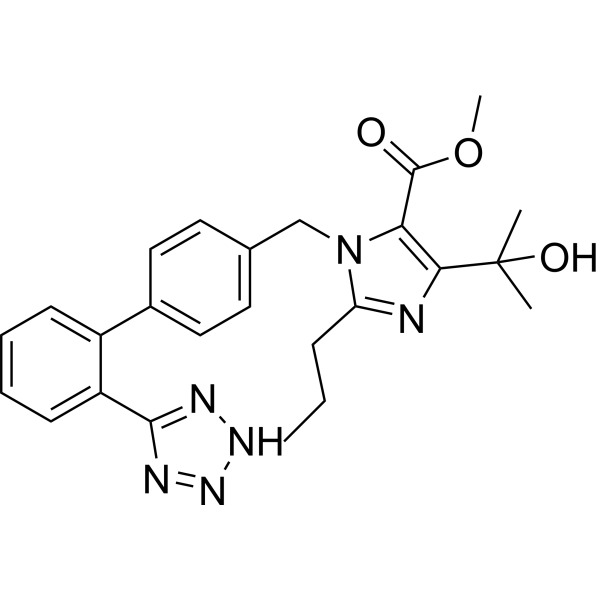 0 ImagesCat. No.: HY-131278CAS No.: 1347262-29-6Olmesartan methyl ester is an intermediate in the synthesis of Olmesartan medoxomil. Olmesartan medoxomil is a potent and selective angiotensin AT1 receptor antagonist with IC50 of 66.2 μM.
-
[Val4] Angiotensin III acetate
![[Val4] Angiotensin III acetate](https://file.medchemexpress.com/product_pic/hy-p3910.gif "Click to View [Val4] Angiotensin III acetate Product Detail") 0 Images[Val4] Angiotensin III acetate is an angiotension III peptide. [Val4] Angiotensin III acetate is a potent full agonist of Gαq and βarr2 response, with pEC50 values of 8.31 and 8.44, respectively.
0 Images[Val4] Angiotensin III acetate is an angiotension III peptide. [Val4] Angiotensin III acetate is a potent full agonist of Gαq and βarr2 response, with pEC50 values of 8.31 and 8.44, respectively.
-
Candesartan Cilexetil (Standard)
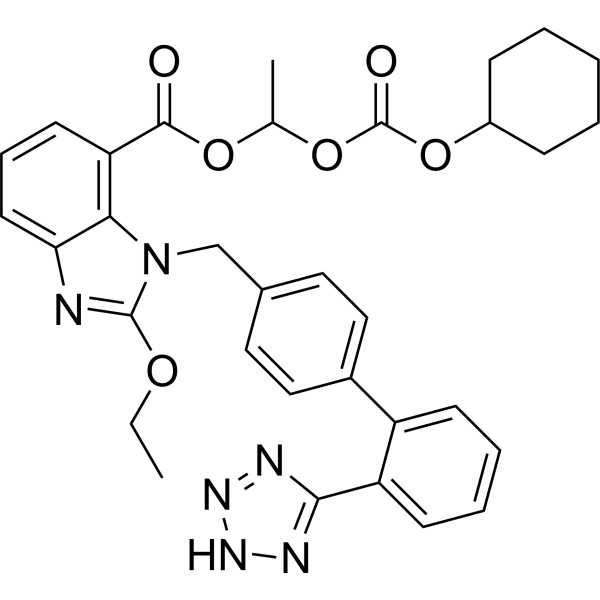 0 ImagesSynonyms: TCV-116 (Standard)Candesartan Cilexetil (Standard) is the analytical standard of Candesartan Cilexetil. This product is intended for research and analytical applications. Candesartan Cilexetil (TCV-116) is an angiotensin II receptor inhibitor. Candesartan Cilexetil ameliorates the pulmonary fibrosis and has antiviral and skin wound healing effect. Candesartan Cilexetil can be used for the research of high blood pressure.
-
Valsartan (Standard)
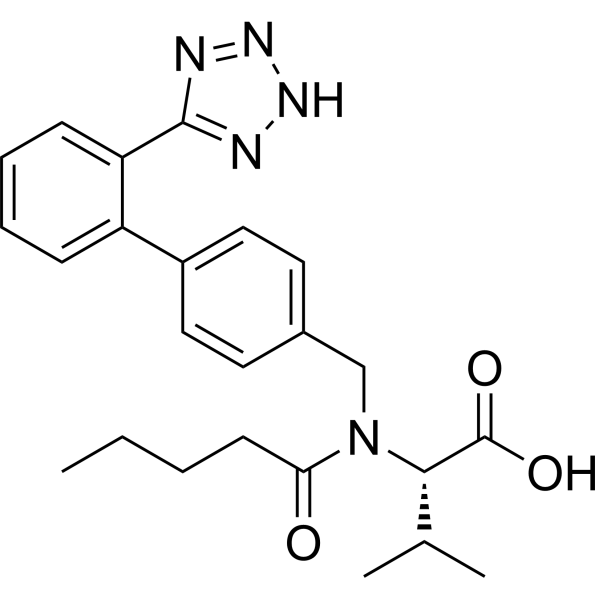 0 ImagesSynonyms: CGP 48933 (Standard)Valsartan (Standard) is the analytical standard of Valsartan. This product is intended for research and analytical applications. Valsartan (CGP 48933) is an angiotensin II receptor antagonist and has the potential for high blood pressure and heart failure research.
-
Candesartan-d5
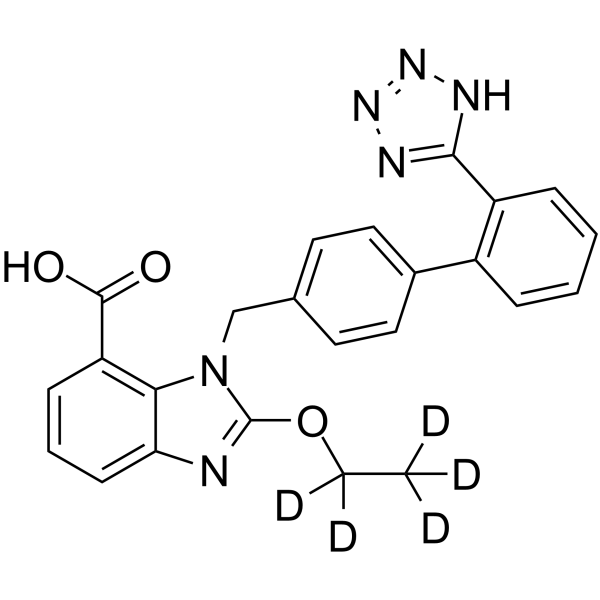 0 ImagesCat. No.: HY-B0205S1CAS No.: 1189650-58-5Candesartan-d5 is the deuterium labeled Candesartan. Candesartan is an angiotensin II receptor antagonist with IC50 of 0.26 nM.
-
Candesartan (Standard)
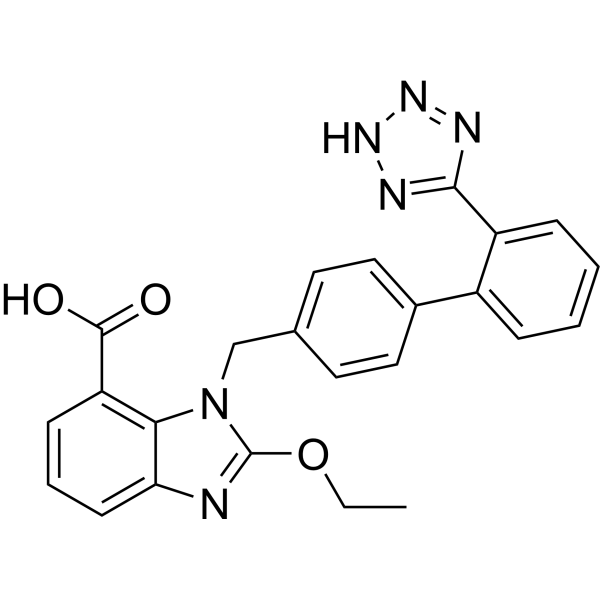 0 ImagesSynonyms: CV 11974 (Standard)Candesartan (Standard) is the analytical standard of Candesartan. This product is intended for research and analytical applications. Candesartan (CV 11974) is an orally active angiotensin II AT1-Receptor blocker and PPAR-γ agonist. Candesartan has potent and long-lasting antihypertensive effects. Candesartan can be used for the research of hypertension, chronic heart failure (CHF) and Traumatic brain injury (TBI).
-
Diminazene
 0 ImagesCat. No.: HY-W342283CAS No.: 536-71-0Diminazene is an antiparasitic agent widely used to treat parasitic diseases caused by hemoparasites (such as trypanosomes and babesia). Diminazene acts as an ACE2 activator and exerts cardiovascular protective effects by activating the ACE2/Ang-(1-7)/Mas receptor axis. By regulating gut microbiota-tryptophan metabolism, Diminazene inhibits the activation of core inflammatory signaling pathways including MAPK, STAT and NF-κB, increases central 5-HT levels, and suppresses splenic TNF-α production, thereby alleviating systemic inflammation.
-
DuP-532
 0 ImagesDuP-532 is an angiotensin type 1 receptor antagonist with potential activity in the suppression of hypertension and heart failure. DuP-532 can react with a range of aryl and heteroaryl halides to form perfluoroalkyl(hetero)arenes in moderate to high yields. Computational studies of DuP-532 suggest that coordination of a second phenyl ring ligand may lower the energy barrier for decarboxylation of perfluorocarboxylates, thereby promoting the perfluoroalkylation reaction.
-
Olmesartan-d4
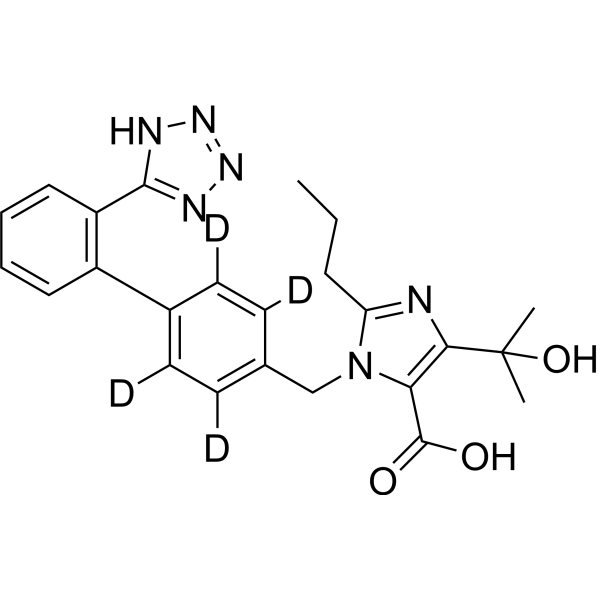 0 ImagesSynonyms: RNH-6270-d4Olmesartan-d4 (RNH-6270-d4) is the deuterium labeled Olmesartan (HY-17004). Olmesartan is an angiotensin II receptor (AT1R) antagonist used to treat high blood pressure.
-
Angiogenin (108-122)
 0 ImagesCat. No.: HY-P1516CAS No.: 112173-49-6Angiogenin (108-122) is an angiogenin peptide.
-
Dehydro Olmesartan
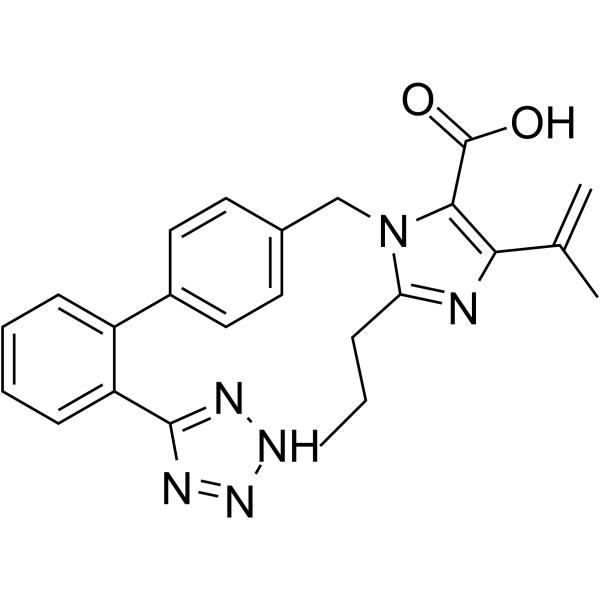 0 ImagesDehydro Olmesartan is a derivative of Olmesartan. Olmesartan is an angiotensin II receptor (AT1R) antagonist and has the potential for high blood pressure study.
-
Ro 106-9920
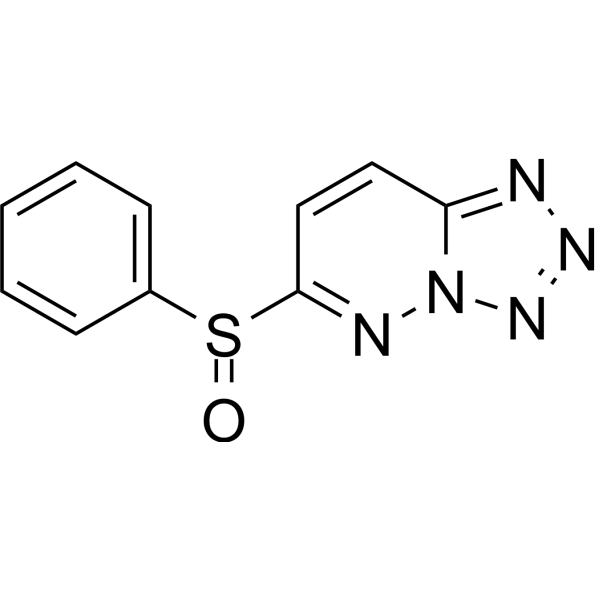 0 ImagesCat. No.: HY-107665CAS No.: 62645-28-7Ro 106-9920 is an orally active NF-κB inhibitor. Ro 106-9920 prevents ubiquitination of IκBα, blocks nuclear translocation of NF-κB, and inhibits NF-κB activation. Ro 106-9920 suppresses TNF-α-induced tissue factor expression and procoagulant activity, enhances TNF-α-mediated cytotoxicity against cancer cells, and eliminates the formation of neutrophil extracellular traps. Ro 106-9920 inhibits NLRP3 inflammasome activation, reduces inflammatory cytokine secretion, decreases myeloperoxidase activity, attenuates renal cell apoptosis, and improves renal function. Ro 106-9920 blocks ANG II (Angiotensin II human) (HY-13948)-induced nuclear localization of p65, internalization of AT1A receptor, colocalization of β-arrestin-2, and expression of COX-2, and alters the formation of β-arrestin endosomes. Ro 106-9920 can be used in research related to non-small cell lung cancer, acute kidney injury, diabetes mellitus, and osteoporosis.
-
Telmisartan-d7
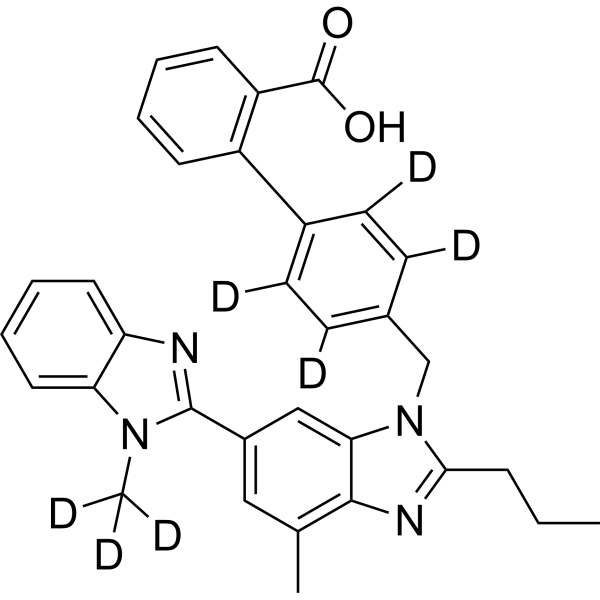 0 ImagesCat. No.: HY-13955S3CAS No.: 1794754-60-1Synonyms: BIBR 277-d7Telmisartan-d7 (BIBR 277-d7) is a deuterium labeled Telmisartan (HY-13955). Telmisartan is a potent, long lasting antagonist of angiotensin II type 1 receptor (AT1), selectively inhibiting the binding of 125I-AngII to AT1 receptors with IC50 of 9.2 nM.
-
Olmesartan-d6
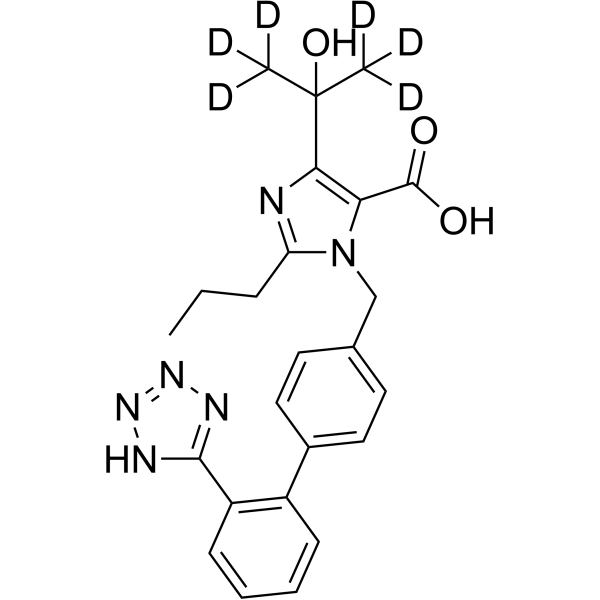 0 ImagesSynonyms: RNH-6270-d6Olmesartan-d6 (RNH-6270-d6) is the deuterium labeled Olmesartan. Olmesartan (RNH-6270) is an angiotensin II receptor (AT1R) antagonist used to treat high blood pressure.
-
Tetrahydro Aldosterone
 0 ImagesTetrahydro Aldosterone is a steroid which can inhibit adrenal angiotensin II receptors with an IC50 of 10 μM.
-
Nitrosoglutathione (Standard)
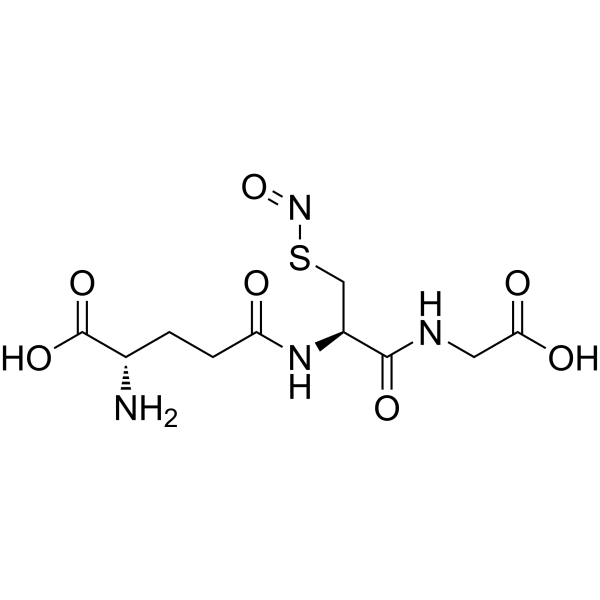 0 ImagesCat. No.: HY-D0845RCAS No.: 57564-91-7Synonyms: GSNO (Standard); RVC-588 (Standard); S-Nitroso-L-glutathione (Standard)Nitrosoglutathione (Standard) (GSNO (Standard)) is the analytical standard of Nitrosoglutathione (HY-D0845). This product is intended for research and analytical applications. Nitrosoglutathione (GSNO), a exogenous NO donor and a substrate for rat alcohol dehydrogenase class III isoenzyme, inhibits cerebrovascular angiotensin II-dependent and -independent AT1 receptor responses. x
-
Pratosartan
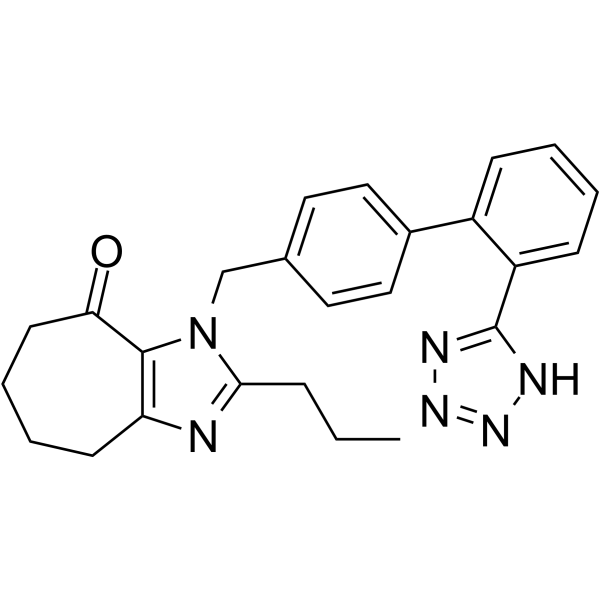 0 ImagesSynonyms: FW 7203; KD 3-671; KT 3671Pratosartan is a selective angiotensin II receptor antagonist.
-
Tranilast sodium
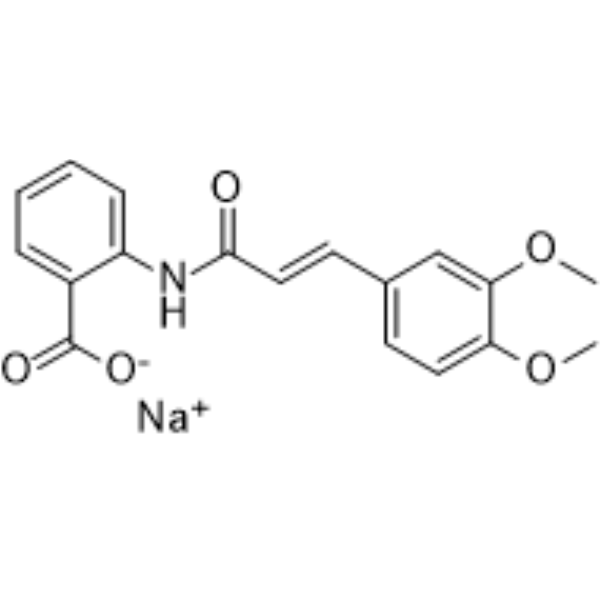 0 ImagesSynonyms: MK-341 sodium; SB 252218 sodiumTranilast sodium (MK-341 sodium) acts as an anti-atopic agent. Tranilast suppresses production of prostaglandin D2 (PGD2, IC50= 0.1 mM). Tranilast sodium exhibits anti-inflammatory and immunomodulatory effects. Tranilast sodium antagonizes angiotensin II and inhibits its biological effects in vascular smooth muscle cells.
-
E4177
 0 ImagesSynonyms: 57G709E4177 (57G709) is an orally active angiotensin II receptor antagonist. E4177 can inhibit the growth of vascular smooth muscle cells (HASMC) and the increase of cell surface area. In addition, E4177 can also increase the expression of platelet-derived growth factor (PDGF) receptor. E4177 can be used in the study of vascular diseases.




